
How Can I Set Realistic Fitness Goals At The Health Club?
Are you finding setting realistic fitness goals at your health club challenging? It’s common to feel a bit lost when crafting a fitness plan that is both achievable and motivating. This guide will help to break down the process so you can set goals that keep you on track and excited about your health journey.
Understanding Your Starting Point
Before setting any fitness goals, it’s essential to understand where you’re beginning. This involves evaluating your current fitness level, health conditions, and lifestyle. Knowing your starting point helps you set goals that are both realistic and personal to you.
Assess Your Fitness Level
An honest assessment of your fitness level will give you a clear picture of where you stand and what you need to work on. Consider these aspects:
- Cardio endurance: How long can you walk, run, or cycle without feeling exhausted?
- Strength: How much weight can you comfortably lift, and how many repetitions can you perform?
- Flexibility: Can you touch your toes or feel stiff?
- Body composition: What’s your body fat percentage, and how does it compare to a healthy range?
Consult a Professional
Consulting with a fitness professional or a health club trainer can provide a more detailed assessment and personalized advice. They can guide you on which areas need more attention and how to structure your workout routine.
Setting SMART Fitness Goals
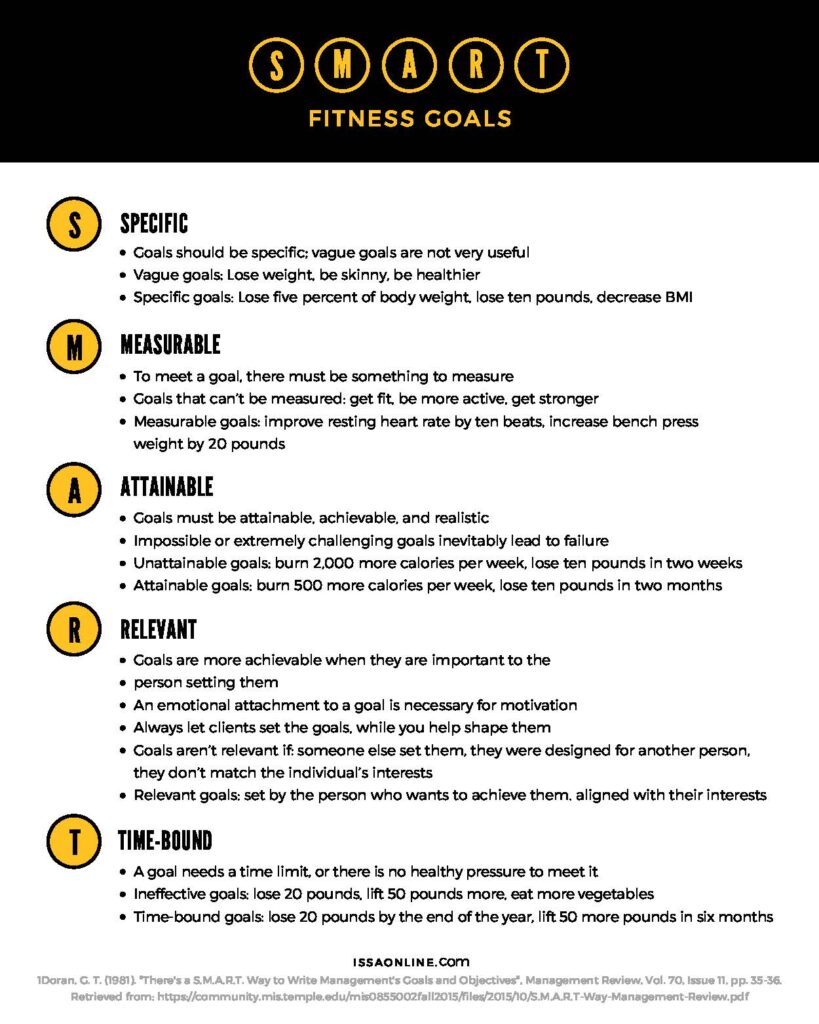
The SMART criteria is an effective way of setting fitness goals. SMART stands for Specific, Measurable, Achievable, Relevant, and Time-bound.
Specific
Your goals should be clear and specific. Instead of saying, “I want to get fit,” think about what that means for you. For example, “I want to run a 5K without stopping.”
Measurable
Goals need to be measurable so you can track your progress. If you want to lose weight, specify how much you aim to lose, like “I want to lose 10 pounds.”
Achievable
While it’s great to be ambitious, your goals should be realistic and attainable, given your current fitness level. Setting a goal to run a marathon next month if you’re new to running isn’t feasible. However, aiming to run a 5K within three months is more reasonable.
Relevant
Your goals should matter to you personally and fit within the enormous scope of your life. A relevant goal keeps you motivated. If improving heart health is essential due to a family history of heart disease, focusing on cardio exercises makes the goal relevant.
Time-bound
Having a deadline creates a sense of urgency and helps you stay focused. For example, “I want to lose 10 pounds in three months” gives you a specific timeframe to work towards.
Types of Fitness Goals
Fitness goals can be categorized into different types. It’s crucial to balance these types for well-rounded health.
Short-term vs. Long-term Goals
Short-term goals are smaller milestones that can be reached within a few weeks or months, like “I will go to the gym three times a week for the next month.”
Long-term goals take more time to achieve, such as “I want to complete a half-marathon in a year.”
Performance-based Goals
These goals focus on improving specific fitness abilities. Examples include increasing the number of push-ups you can do or improving your running time.
Body Composition Goals
These goals target changes in your body’s composition, such as losing weight, gaining muscle, or reducing body fat percentage.
Health and Wellness Goals
Sometimes, fitness goals are more about health and less about appearance or performance. These can include lowering blood pressure, improving cholesterol levels, or reducing stress.
| Type of Goal | Examples |
|---|---|
| Short-term Goal | Workout 4 times a week for one month |
| Long-term Goal | Run a 10K race in 6 months |
| Performance-based Goal | Increase bench press weight by 20 pounds in 3 months |
| Body Composition Goal | Lose 15 pounds in 4 months |
| Health and Wellness Goal | Lower blood pressure by 10 points in 6 months |
Creating a Balanced Fitness Plan
A well-rounded fitness plan includes various exercises that address different aspects of health and fitness.
Cardiovascular Exercises
Cardio exercises improve heart health and endurance. Aim to include activities like running, cycling, swimming, or even brisk walking in your fitness plan.
Cardio Frequency and Duration
The American Heart Association recommends at least 150 minutes of moderate-intensity cardio weekly. You can break this down into 30 minutes of exercise five days a week.
Strength Training
Strength training is vital for muscle building and metabolic health. Incorporate weight lifting, resistance bands, or bodyweight exercises like push-ups and squats.
Strength Training Guidelines
The general recommendation is two to three weekly strength training sessions focusing on different muscle groups.
Flexibility and Balance
Flexibility exercises like stretching and yoga help maintain mobility and prevent injuries. Balance training can improve stability and prevent falls.
Incorporating Flexibility Exercises
Aim for stretching exercises thrice weekly, holding each stretch for 15 to 30 seconds.
Rest and Recovery
Effective fitness plans include time for rest and recovery. Overtraining can lead to injuries and burnout. Could you make sure you have at least one to two rest days each week and pay attention to how your body feels?

Tracking Your Progress
Keeping track of your fitness journey can be incredibly motivating. It allows you to see how far you’ve come and make adjustments to your plan.
Fitness Journal
A fitness journal is a great way to track your workouts, diet, and any changes in your body composition. You can jot down your exercises, how long you did them, and how you felt during and after.
Fitness Apps
There are numerous fitness apps designed to help you track your progress. These apps can record your workouts, monitor your diet, and even provide feedback on your performance.
Regular Check-ins
Could you set regular dates to check your progress? Monthly evaluations can help you see whether you’re on track to meet your short-term and long-term goals.
Staying Motivated
Maintaining motivation is often one of the biggest challenges in a fitness journey. Understanding what drives you can help keep the momentum going.
Set Mini-goals
Short-term mini-goals provide quick wins that can boost your confidence and motivation. Achieving a small goal, like adding an extra set to your routine, can significantly impact you.
Reward Yourself
Rewards can serve as a powerful motivator. After hitting a significant milestone, treat yourself to something enjoyable, like a new workout outfit or a relaxing spa day.
Find a Workout Buddy
A workout partner can make your fitness routine more enjoyable and hold you accountable. Friends, family members, or even colleagues can make great workout buddies.

Dealing with Setbacks
Setbacks are a natural part of any journey. How you deal with them can significantly impact your overall success.
Acknowledge the Setback
First, please be sure to recognize what went wrong. Maybe you got injured, or life became too busy. Please be sure to acknowledge the setback without being harsh on yourself.
Reassess and Adjust
Could you look at your fitness plan and see if it needs adjustment? Perhaps your goals were too ambitious, or your schedule needs tweaking.
Get Back on Track
The most crucial step is to get back on track as soon as possible. Even small steps can help you regain your momentum.
Benefits of Setting Realistic Fitness Goals
Setting realistic fitness goals at the health club offers numerous benefits beyond physical health.
Improved Focus and Clarity
Clear, achievable goals offer direction and focus. They help you prioritize workouts and diet plans that align with your objectives.
Increased Motivation
Realistic goals are motivated by offering tangible milestones for which to strive and accomplish.
Better Health Outcomes
Achieving smaller, realistic goals consistently leads to better long-term health outcomes, including improved cardiovascular health, strength, and flexibility.
Enhanced Self-Confidence
Hitting your fitness targets boosts your self-esteem and provides the confidence to tackle other life challenges.

Case Studies
Understanding how others have navigated their fitness journeys can be inspirational and informative.
Case Study 1: John’s Weight Loss Journey
John was 40 pounds overweight and decided to join a health club. He started with a fitness assessment and set a realistic goal of losing 1-2 pounds weekly. By focusing on cardio workouts and a balanced diet, he lost 20 pounds in four months.
Case Study 2: Maria’s Strength Training Success
Maria wanted to build muscle and improve her overall strength. She set a goal to increase her bench press by 20 pounds over three months. Following a structured strength training program and a protein-rich diet, she met her goal and felt more vital than ever.
Case Study 3: Emily’s Journey to a 5K
Emily had never been much of a runner but wanted to improve her cardio fitness. She set a goal to run a 5K within six months. Following a gradual training plan, she completed her first 5K and found a new love for running.
| Name | Initial Goal | Strategy | Result |
|---|---|---|---|
| John | Lose 40 pounds | Focused on cardio and a balanced diet | Lost 20 pounds in four months |
| Maria | Increase bench press by 20 lbs | Followed structured strength training | Achieved goal in three months |
| Emily | Run a 5K | Gradual training plan for six months | Completed her first 5K race |
Setting realistic fitness goals at the health club can be empowering and rewarding. You can create a sustainable fitness routine by understanding your starting point, setting SMART goals, balancing different fitness activities, and tracking your progress. Stay motivated, embrace setbacks as learning opportunities, and celebrate your achievements. Your health journey is personal; with the right approach, you can reach your fitness goals and beyond.
==========
Content 10/10/G